

Cis Middle For Web Safety
Chathub Free Random Video Chat With Strangers
2026-08-05Чи можна взяти кредит із поганою кредитною історією?
2026-08-07CIEM tells you what permissions exist; validation tells you which ones an attacker could exploit. Armed with this data, organizations can eliminate underperforming controls and dedicate higher sources to products and strategies that deliver robust safety and better ROI. Onfido is amongst the high id verification providers, identified for its AI-powered id verification software program. Solutions such as Trulioo and Socure are generally used by financial institutions to carry out buyer and enterprise verification, display high-risk profiles, and support AML compliance throughout world or regional markets. APIs, the unseen connections powering modern apps, may be weak entry points for attackers. Weak API security exposes sensitive information and significant capabilities, probably leading to breaches and disruptions.
Security Control Validation Vs Penetration Testing
Instruments ought to generate audit-ready reports sorted by repo, severity, or compliance framework—and ideally combine together with your GRC/compliance platforms to streamline workflows. Tools that integrate natively with GitHub, GitLab, Bitbucket, or Azure Repos reduce setup friction. Sturdy IDE support (VS Code, JetBrains, and so forth.) with inline findings, remediation steering, and autofix ideas further streamlines secure coding. This guide is a breakdown of 10 SAST tools that truly meet those necessities. Not vendor slides, not safety advertising jargon, but actual tooling you can install, take a look at, and plug into your pipelines. For every one, I’ll clarify how it works, what it does well, where it falls quick, and the way to get hands-on rapidly.

Trust Your Vendors’ Safety Assessments
Dima Potekhin, CTO and Co-Founder of CyCognito, is an expert in mass-scale information evaluation and safety. He is an autodidact who has been coding since the age of nine and holds 4 patents that embrace processes for giant content material delivery networks (CDNs) and internet-scale infrastructure. Here are some essential features to think about when implementing safety control validation. Management validation assesses how tools carry out in sequence throughout the assault chain. For instance, it could verify that an endpoint block triggers a SIEM alert, which then initiates a SOAR workflow. From lowered breach costs to sooner investigations, continuous validation pays for itself in effectivity and danger discount.
Many organizations use validation platforms alongside PTaaS providers to retest remediated findings, verify that mitigations are effective, and monitor for regressions. Security Management Validation allows organizations to check whether policy-based defenses corresponding to firewalls, Endpoint Detection and Response (EDR), and Privileged Access Management (PAM) solutions are functioning as meant. Via controlled simulations, teams can assess if firewall guidelines are appropriately blocking visitors, if EDRs are figuring out suspicious conduct, and if PAMs are blocking abuse of highly privileged entry. This helps uncover coverage misconfigurations, outdated rules, or blind spots in detection logic.
These materials are reviewed by the PMO to discover out alignment with GovRAMP requirements—reducing time, cost, and duplication. This method reduces duplication, accelerates sales cycles, and will increase confidence with public sector patrons.
- Attack floor administration is the continual strategy of identifying and reducing an organization’s exposed assets and vulnerabilities before attackers can exploit them.
- With the assistance of this product we can perform continuosly endpoint assault via newest ways and methods which are utilized by risk actors..
- Implementing offensive safety, protection in depth, and layered security across your tech stack helps to attenuate danger and defend business worth.
- Cloud Safety Validation tells you whether cloud exposures can actually be exploited.
Platform Overview
With SafeBreach, the group at this Fortune 500 drug and device growth company instituted automated testing of the security structure, utilizing advanced, patented technology to execute assaults safely and continuously. Picus validates cloud configurations, controls, and identification across AWS, Azure, and GCP from a single platform, so multi-cloud environments don’t fragment into separate, inconsistently validated estates. Cloud environments change every day, and shared-responsibility gaps are straightforward to overlook. What seemed safe last week may quietly be exploitable now, which leaves extra alerts than solutions and little certainty about what actually places the enterprise in danger. Vulnerability Scanning is a discovery course of that identifies known vulnerabilities in software program, working techniques, and configurations throughout an surroundings. It supplies a snapshot of what weaknesses exist however does not determine whether or not present controls are capable of detecting or blocking exploitation attempts.
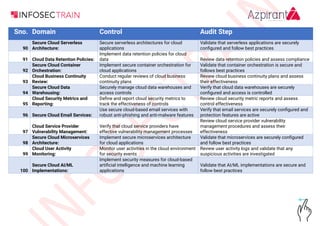
This approach takes the standard components of management validation and enhances it by permitting defenders to imitate the likely techniques and assault paths used in a breach attempt. Conventional publicity management typically produces overwhelming numbers of vulnerabilities and findings without sufficient context about real-world threat. Safety Management Validation provides operational context by testing how an attacker might leverage those exposures using realistic attack chains and adversary behaviors.
Test Throughout Multiple Assault Vectors And Ttps
Choose tools that natively help your languages and plug directly into your CI/CD and IDEs. Focus on developer experience, alerts must be specific, actionable, and low on noise. The apiVersion header is user-supplied and instantly concatenated right into a log message. SonarQube appropriately marked this as a safety vulnerability, it’s the type of pattern that’s susceptible to log injection and in some circumstances, JNDI injection (think Log4Shell-style assaults if unresolved).
You study which misconfigurations are reachable, which identities may be abused, and how a single foothold chains into real impression, with clear steps to repair every one. Trustpair focuses on payment fraud prevention, not just identification verification. By validating bank accounts earlier than payments are launched, it reduces fraud, operational prices, and compliance danger whereas integrating seamlessly into current https://www.m-sedan.com/bluetooth_hands_free_connection-7447.html workflows and instruments.
As An Alternative of assuming a finding is a risk, it produces proof of real exploitability. While there are many approaches to security management validation, in today’s deeply difficult cybersecurity landscape it’s vitally necessary to decide on a technique that permits for steady and automatic safety testing. As A Result Of techniques are always changing and threats evolving, conventional cut-off date validation can only provide a restricted window into the state of organizational security. What may work in the future might show insufficient to the duty the following, should conditions change. Inside a CTEM program, validation can constantly assess external-facing techniques, cloud assets, endpoints, id infrastructure, and community segmentation controls. Assault emulation identifies gaps in prevention, detection, and response capabilities while additionally measuring how exposures change over time as environments evolve.